
- en, opening day without phone
- Cameron
Keep the Score, Lose the Scroll: U.S. Opening Day Without Your Phone

Yes, you can enjoy opening day without your phone, and most people who try it report more presence, not less fun. Expect a short stretch of restlessness early on, which usually fades once you’re occupied with the game or the people around you. Bring a plan: a short checklist, a backup way to track scores, and a screen-free option for live updates.
TL;DR:
- Most people experience initial restlessness during a phone-free day, but it usually fades once they engage with their surroundings or activities.
- Cravings to check the phone peak early in the day and decline as attention shifts to the game or social interactions.
- Planning activities like reading, people-watching, or starting small projects helps maintain presence and reduces the urge to reach for a device.
- Safety and accessibility concerns are more manageable for individuals with flexible schedules, reliable transportation, and someone to handle emergencies.
- Using a Wi-Fi connected score display or setting a strict schedule can improve the experience and make it easier to stay off screens.
Table of Contents
- Common surprises people report during a phone-free day
- What research says about withdrawal and craving when you put your phone away
- Turning boredom into presence: activities and anchors that work
- Who can realistically do this and how to manage safety, accessibility, and emergency needs
- A checklist to plan a smooth phone-free opening day
- Global Day of Unplugging, National No Phone Day, and how to participate
- Screen-free sports updates: how The Original LiveWire Board helps you follow the game without your phone
- Author perspective: an invitation to try intentional disconnection
- Product suggestion: The Original LiveWire Board
- FAQ
- Sources
Common surprises people report during a phone-free day
The first hour tends to feel strange. Without a phone to glance at, people notice the sounds around them: the crack of a bat, vendors calling out, the texture of a conversation that would normally get interrupted by a buzzing pocket. Opinion writers who’ve tried 24-hour phone breaks describe this as a kind of volume knob turning up on ordinary life, not because anything changed, but because nothing competed for attention anymore.
Social interactions shift too. Conversations run longer and go deeper when neither person is half-watching a screen. Several first-person accounts mention catching themselves reaching for a phone that isn’t there, then laughing it off and rejoining whatever was happening around them.
Boredom shows up, often within the first few hours, and it tends to surprise people more than the withdrawal itself. A few common reactions readers describe:
- Noticing small details (weather, crowd energy, a stranger’s conversation) that usually get drowned out.
- Talking to people nearby instead of texting someone far away.
- Feeling restless, then settling into a slower rhythm by midafternoon.
- Doing something unplanned, like sketching the scoreboard or striking up a conversation with a neighbor.
What research says about withdrawal and craving when you put your phone away
The urge to check your phone is real, but it’s usually brief. A peer-reviewed abstinence study found that craving and anxiety can spike for some people early in a 24-hour break, but mood and anxiety levels generally rebound and remain largely unaffected by the end of the period.
Most participants in smartphone abstinence research show craving peaking early, then declining as they engage in other tasks, according to the same study. That pattern matches what opening-day attendees describe: the itch to check scores or texts is strongest in the first inning or two, then fades once the game, the crowd, or a conversation takes over.

The practical takeaway is simple. If you expect the early discomfort and give yourself something to focus on, the craving tends to resolve on its own rather than building through the day.
Turning boredom into presence: activities and anchors that work
Boredom shows up because your brain loses its usual habit of filling gaps with a screen. That gap is useful. It’s where presence and small creative moments tend to show up, once you stop treating the quiet as a problem to fix.
A few anchors help you stay in that space instead of reaching for a substitute screen:
- Bring a paperback or a short story so your hands have something to do during lulls.
- Take a slow lap around the stadium concourse or neighborhood before first pitch.
- Watch the crowd instead of your feed. People-watching at a ballpark is its own entertainment.
- Start a small, finishable project, like a scorecard or a sketch of the field.
- Strike up a conversation with whoever is next to you, even briefly.
The key to sustaining any of these is picking one before the restlessness hits, not after. An anchor chosen in the moment tends to lose out to habit.
Who can realistically do this and how to manage safety, accessibility, and emergency needs
Going phone-free is easier for some than others. People with flexible schedules, reliable transportation, and someone else handling childcare for the day have more room to disconnect than people on call for work or caregiving. That’s worth naming honestly rather than treating a phone-free day as equally available to everyone.
A few mitigations make it workable for more people:
- Set a scheduled check-in time with one trusted contact instead of staying reachable all day.
- Carry a printed itinerary and emergency contact card.
- Keep a basic backup phone on hand if you rely on text for safety reasons.
- If you use phone-based assistive technology, adapt the plan around that tool rather than skipping it.
A checklist to plan a smooth phone-free opening day
Most failed attempts at going phone-free come down to one thing: not planning for the basics ahead of time, according to Stanford researchers who study digital habits. A short checklist closes those gaps before they become a reason to cave.
Before the day:
- Tell one or two people you’ll be offline and when you’ll check back in.
- Print or download offline maps, tickets, and directions in advance.
- Set a physical alarm clock so your phone isn’t the thing that wakes you.
- Plan a payment backup, such as cash or a physical card, in case an app would normally handle it.
During the day:
- Start with a morning anchor activity (a walk, coffee, reading) before anyone picks up a device.
- If you want photos, switch your phone to airplane mode and use it camera-only.
- Bring a paperback or small project for downtime.
- Build in water and rest breaks the way you’d plan around a long outdoor day.
If you’re heading to a ballpark for opening day, arrive early, agree on a meeting point and time with anyone you’re with, and lean on venue staff or printed maps instead of a navigation app.
Pro Tip: Treat the day like a bounded experiment rather than an open-ended rule. Knowing it ends at a set time makes the early discomfort easier to sit with.
Global Day of Unplugging, National No Phone Day, and how to participate

Organized unplugging events give the experiment some structure if you’d rather not invent your own rules. Global Day of Unplugging runs on the first weekend of March and promotes a flexible, 24-hour pause from devices, with participation scaled to whatever a person can manage. National No Phone Day, observed informally on April 18, serves a similar purpose as a yearly prompt to reconnect without a screen.
Both events work the same way: pick a timeframe, from one hour to a full day, and treat it as a shared challenge rather than a solo rule. A few ways to apply that structure to opening day:
- Pair up with a friend or family member doing the same pause.
- Start with a single half-day trial before attempting a full 24 hours.
- Use the observance date as a built-in excuse to try it without overthinking the plan.
Screen-free sports updates: how The Original LiveWire Board helps you follow the game without your phone
Following a game without checking a phone used to mean missing scores entirely. One product option connects to Wi-Fi and displays live updates for a chosen baseball, football, basketball, or hockey team, with no app and no screen to scroll past.
That setup suits a few groups in particular:
- Families trying to cut down screen time for kids while still keeping the game on.
- Households managing ADHD-related distraction challenges, where a phone invites far more than a score check.
- Anyone who wants to follow opening day from another room without reaching for a device.
Setup is simple, and the board sits anywhere in the house, turning score-checking into a glance instead of a scroll.
Author perspective: an invitation to try intentional disconnection
A phone-free opening day isn’t a test of willpower, it’s a choice about where your attention goes for a few hours. I’ve found the discomfort passes faster than expected, and what replaces it (a conversation, a quiet half-inning, an unplanned walk) is usually worth more than whatever the phone would have offered. Try it once, adjust the checklist to fit your day, and see what you notice.
— Cameron
Product suggestion: The Original LiveWire Board
If the one thing holding you back from a phone-free opening day is missing the score, The Original LiveWire Board solves that specific problem. It connects to Wi-Fi, tracks your chosen team, and shows live updates without pulling you back into a phone’s other distractions.
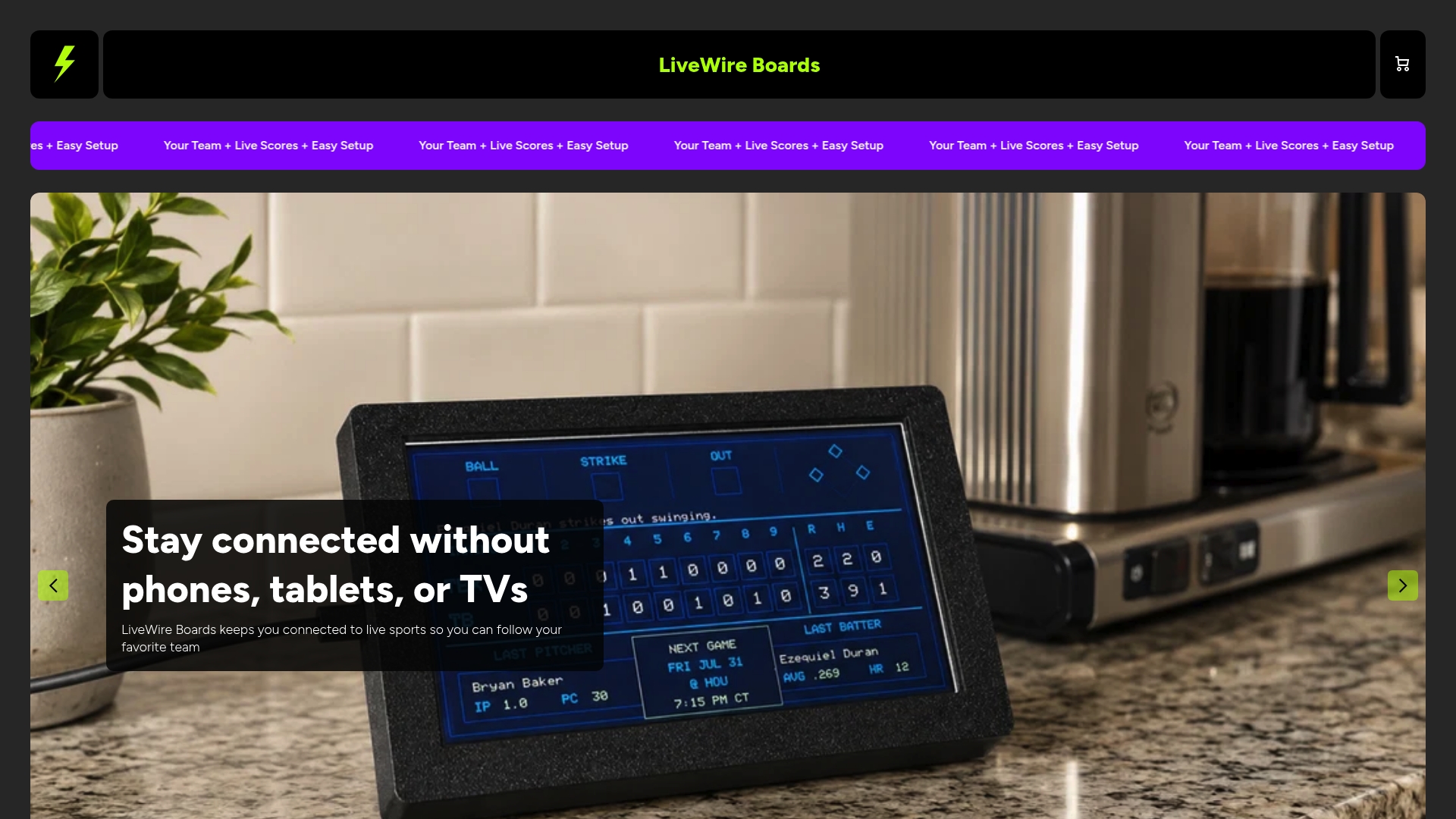
Set one up before opening day and check the score with a glance instead of a swipe.
FAQ
Is there a national no phone day?
Yes, National No Phone Day is observed informally on April 18 each year as a prompt for people to disconnect and reconnect offline. Global Day of Unplugging offers a similar, more structured observance on the first weekend of March.
Can you live without a smartphone in 2026?
Full-time, no, for most Americans, since daily life increasingly assumes smartphone access for payments, navigation, and communication. Going phone-free for a day or a weekend is a different and far more realistic goal, and it’s the one this guide focuses on.
Do billionaires use iPhone or Android?
This article does not have a sourced answer to that question.
What do people do 144 times a day?
This article does not cover a sourced figure for that claim. What research does show is that cravings to check a phone tend to spike early during a break and then ease once you’re engaged in something else, according to smartphone abstinence research.


