
- en, reduce sports screen time
- Cameron
ADHD Families: Research Backed Way to Cut Sports Screen Time

The fastest way to reduce sports screen time while still tracking live games is to swap phones and tablets for a dedicated, screen-free Wi‑Fi scoreboard. That single-purpose design is what makes it stick, and the research on ambient displays backs it up.
TL;DR:
- A dedicated, Wi-Fi-connected, screen-free scoreboard reduces distractions by providing glanceable, non-interruptive score updates that stay visible without notifications or apps.
- Placement in shared household areas at eye level encourages collective viewing and family engagement while minimizing separate device use.
- Implementing simple rules like “glance, do not grab” and pairing the display with brief rituals enhances habit formation and prevents drift into phone browsing.
- Muting notifications, enabling Do Not Disturb mode, and scheduling specific check-in times help control compulsive score checking, especially for ADHD households.
- The setup process is straightforward, requiring minimal time to connect to Wi-Fi, select favorite teams, and place the display in a central spot for maximum household impact.
Table of Contents
- Why Ambient, Screen-Free Displays Cut Down on Distraction
- How Does a Screen-Free Sports Scoreboard Actually Work?
- Where Should You Put It (and What Rules Actually Stop Digital Drift)?
- Simple Habits That Keep Score-Checking From Turning Into Browsing
- What Changes in a House Once the Scoreboard Goes Up
- Get Started With The Original LiveWire Board
- Sources
Why Ambient, Screen-Free Displays Cut Down on Distraction
A phone is never just a scoreboard. Check the score, and you’re one swipe from a text thread, a notification badge, or an autoplay video. A dedicated ambient display can’t do any of that. It sits on a wall or a shelf, shows the score, and stays quiet otherwise.
That distinction has research behind it. Human-computer interaction studies on situated displays for families found that glanceable, non-interruptive devices let households pull information without the constant pull-back-in effect that phones create. Families in co-design sessions even described shared displays as prompts for joint attention, something a personal device rarely produces.
For kids with ADHD, this matters more than it might seem. Attention research on ADHD and digital media links heavy, unstructured screen exposure to reduced cognitive-control efficiency. A phone check demands inhibitory control: resist the badge, resist the feed, put it back down. An ambient board demands none of that. There’s nothing to resist.
A statistic worth sitting with: longitudinal reviews of digital media use and ADHD describe a reciprocal spiral where heavy device use predicts worse attention outcomes, and existing attention struggles predict heavier device use. Breaking that loop at the device level, before the spiral starts, is a lot easier than breaking it after a habit forms.
What this means practically:
- A glanceable board reduces the temptation to get distracted by other phone content.
- Placing it in a shared space encourages family members to check scores together rather than separately on personal devices.
- Eliminating phone use also removes exposure to notifications that drive distraction.
How Does a Screen-Free Sports Scoreboard Actually Work?
The mechanics are simple by design, which is the point. A board connects to home Wi‑Fi, and once it’s online, you pick the teams you follow across baseball, football, basketball, or hockey. From there, updates push directly to the display. There’s no app to open, no feed to scroll, no login screen standing between you and the score.
That push model matters more than it sounds. A phone notification is an invitation to linger. An ambient update is just information showing up where you already look. HCI design work on ambient artifacts found families perceived physical, glanceable devices as noticeably less distracting than phone-based equivalents, partly because there’s no interface to browse once the information is delivered.
Setting one up follows a short sequence:
- Plug in the board and connect it to your home Wi‑Fi network.
- Select your favorite teams from the supported sports.
- Place it somewhere the household naturally passes by.
- Let live score updates arrive automatically, no app checks required.
Coverage generally spans the four major team sports, which covers most households’ year-round following. Placement deserves its own thought, and that’s worth walking through separately.
Where Should You Put It (and What Rules Actually Stop Digital Drift)?
Placement affects effectiveness. A board placed in private rooms can recreate phone-like isolation, while placing it in shared areas encourages family members to glance together, supporting co-regulation. Ideal locations are at eye level for children, with clear sightlines and sufficient lighting. Avoid placing near phone charging areas to prevent unintended device use triggers.
Household rules work best when they’re short enough for a kid to repeat back:
- “We glance, we don’t grab a phone to check more.”
- “Score updates happen at the board, nothing else lives there.”
- “If you want stats or highlights, that’s a separate, scheduled screen time.”
An onboarding script helps more than most parents expect. Something as plain as “This is where we check the score now, not on your tablet” gives kids a clear substitute rather than a vague restriction. Co-design research on family displays found the device alone rarely changes behavior. The short verbal ritual around it is what makes the habit take.
Pro Tip: Pair the board with one small ritual, a 60‑second score prediction before the game or a two‑minute recap after, so the check-in has a natural endpoint instead of trailing off into “let me just look at one more thing” on a phone.
Simple Habits That Keep Score-Checking From Turning Into Browsing
The board solves the hardware problem. Behavior still needs a little scaffolding, especially in the first few weeks.
On the tech side, mute team score notifications on phones entirely rather than trying to ignore them, turn on Do Not Disturb during games, and disable any lock-screen sports widgets that tempt a “just checking” swipe. If the phone can’t interrupt, it stops competing with the board for attention.
Behaviorally, scheduled check-ins beat constant vigilance. Fans checking scores compulsively during live games are often driven by fear of missing something, a pattern researchers studying second-screen sports use tie directly to FoMO. A fixed glance at the board every inning or quarter satisfies that pull without opening a phone at all.
For ADHD households specifically, keep the ritual short and identical every time. Predictability lowers the cognitive load of the check-in itself. Some ideas that work well:
- A quick prediction game before kickoff (loser does dishes).
- A two-minute post-game recap at the dinner table instead of a phone recap.
- One family member reads the board aloud instead of everyone looking separately.
A meal-planning approach built for neurodivergent families offers a useful parallel: reducing decision points, not adding more rules, is usually what makes a new routine stick.
Pro Tip: If a kid asks “can I check the highlights,” treat that as a separate, scheduled screen session rather than an extension of the board check. Keeping the two entirely separate is what prevents drift.
What Changes in a House Once the Scoreboard Goes Up
Households adopting a dedicated scoreboard report that checking the score no longer prompts phone use. This aligns with research indicating shared, glanceable displays help families engage together instead of separating on individual devices.
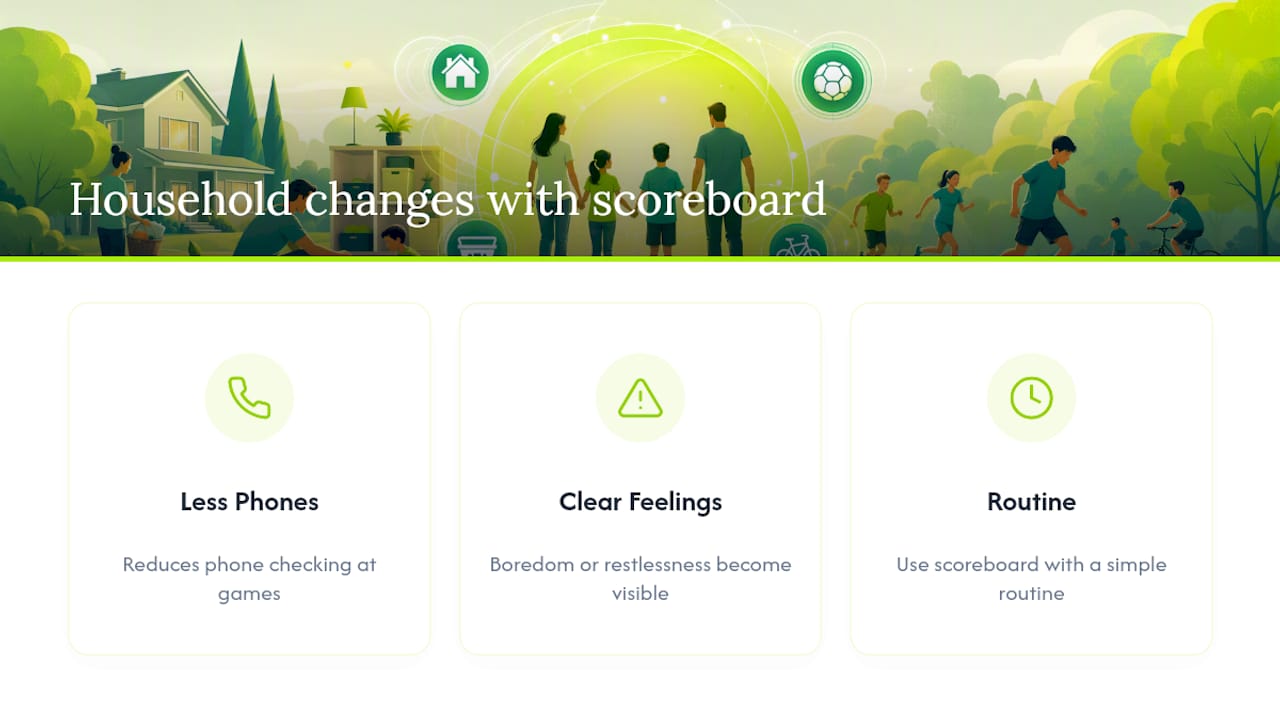
Users often realize that much phone-checking during games was not truly about the score, but underlying boredom or restlessness. Removing the phone makes those feelings clearer and easier to manage.
Success tends to come to those who combine the device with a simple, routine habit to support engagement.
— Cameron
Get Started With The Original LiveWire Board
Everything covered here, the Wi‑Fi setup, the team selection across baseball, football, basketball, and hockey, the glanceable updates with no app required, is exactly what The Original LiveWire Board delivers out of the box. It’s built for families who want scores without opening a screen, and it’s especially useful in ADHD households where cutting interruptions matters more than usual.
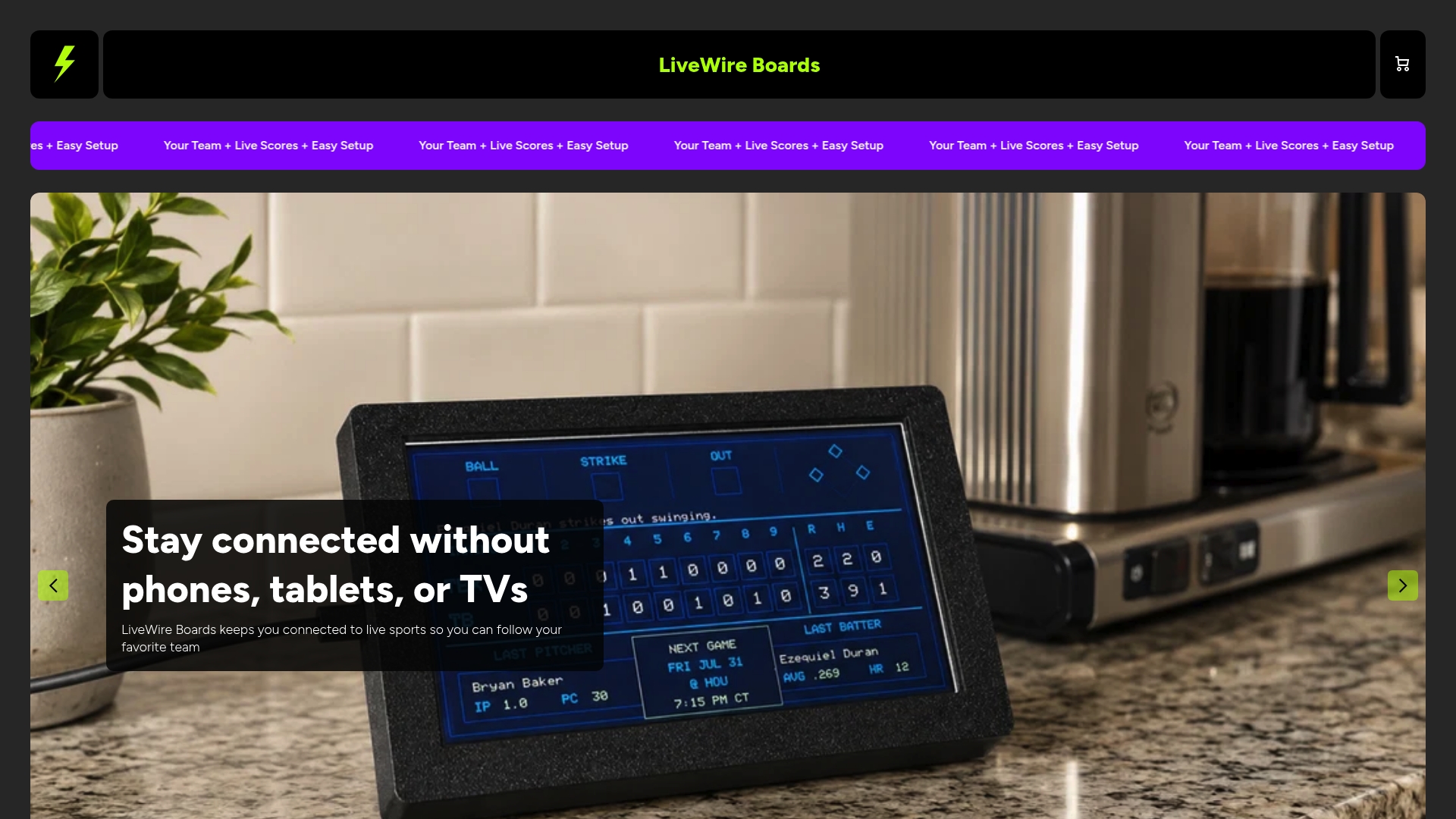
Setup takes minutes: connect to your home network, pick your teams, and pick a shared wall or shelf where the whole household passes by. Before ordering, check which sports and teams are currently supported so it matches your household’s actual rooting interests, and review shipping details on the product page. Optional color case upgrades let you personalize the board’s appearance. If you’re ready to stop checking your phone every quarter, visit the LiveWire Boards product page and get one set up before your next game night.


