
- en, sports ticker cost
- Cameron
Sports Ticker Cost: $1,000–$2,000 Home Units, Plus Install Fees

Consumer sports tickers typically cost around one to two thousand dollars, while venue-grade LED scoreboards can vary widely, from amounts characteristic of smaller venues up to very high-end stadium systems costing hundreds of thousands to millions of dollars. Live-feed subscriptions typically run a few dollars a month for home units, with professional feeds priced in tiers. Read on for the specific numbers behind each category plus what to ask vendors before you sign anything.
TL;DR:
- Small venues and home sports tickers generally cost between $1,000 and $2,000, with compact models sometimes priced below $1,000 during promotions.
- The cost of stadium and arena scoreboards varies widely, from tens of thousands to several million dollars, mainly driven by size, pixel density, and video capability.
- Site work, installation, electrical, permits, and custom accessories can substantially increase overall project costs beyond hardware prices.
- Customization, such as team logos, sponsor panels, or specific colors, can add a notable surcharge, and leasing is generally more common for large venues than for small or home setups.
Table of Contents
- Sports Ticker Cost by Category: Home, Venue, and Stadium
- What Actually Drives the Price of a Scoreboard?
- How Do Sports Ticker Subscriptions and Feed Costs Work?
- How to Budget and What to Ask Vendors Before You Buy
- Why Screen-Free Scoreboards Fit a Different Kind of Buyer
- What Does Shipping and Delivery Add to the Total?
- Does Customization Change the Price?
- Should You Lease or Buy a Sports Ticker?
- What’s the Real Total Cost of Ownership?
- Hardware Investment or Subscription Value: What Actually Matters?
- Get Live Scores Without the Screen Time Trade-Off
- Sources
Sports Ticker Cost by Category: Home, Venue, and Stadium
The price gap between a living room scoreboard and a stadium video board is enormous, and it comes down to size, technology, and who’s installing it.
Consumer and home sports tickers are relatively affordable. Retail units for home use commonly list near one to two thousand dollars, with some compact models occasionally priced below one thousand dollars during promotions. Product listings for units like the Tickercom Game Day Sports Ticker show this pattern clearly: a one-time hardware purchase, a first-year content package, then a modest recurring fee.
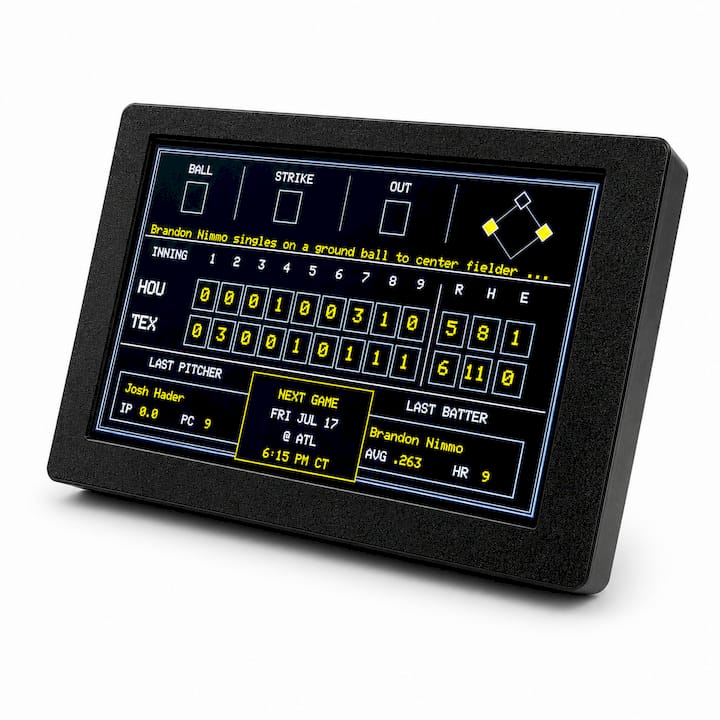
Mid-range LED tickers, such as those used in sports bars, gyms, or small club facilities, typically fall within a price range starting from the low thousands of dollars to higher amounts depending on panel size and feature set like scrolling stats, odds, or multiple sports feeds. Sports Venue Calculator’s LED scoreboard buyer’s guide puts small venue and club-level displays in this range, scaling up sharply once you add multimedia video capability.
Stadium and arena scoreboards vary greatly in cost. A fixed-digit scoreboard for a high school field often costs tens of thousands of dollars, while full video boards for college or professional stadiums can cost from hundreds of thousands up to several million dollars. Comsight’s cost guide notes that video capability, pixel density, and sheer display size are what push these projects so far past a basic digit board.
The gap that surprises buyers: the display itself is often the smaller line item. Installation, electrical work, and structural mounting frequently add a substantial chunk to the total project cost, sometimes rivaling the price of the hardware.
- Consumer/home tickers: generally around one to two thousand dollars
- Small venue/club LED displays: low thousands to mid five figures
- Stadium video scoreboards: tens of thousands to millions
What Actually Drives the Price of a Scoreboard?
Vendors don’t pull numbers out of thin air. Every quote is built from a handful of specs that multiply cost fast.
- Cabinet size and face area. A larger display means more LED modules, more structural steel, and more shipping weight. Doubling the face area doesn’t double the price. It often does worse.
- Pixel pitch, resolution, and color depth. Tighter pixel pitch (the spacing between individual LEDs) means sharper images and video, but it also means dramatically more components packed into the same square footage.
- Digit height and team-name panels. Fixed-digit boards charge partly by digit height, since taller digits require bigger, more expensive modules. Adding team-name panels or extra timer modules stacks on cost quickly.
- Site work. Posts, concrete footings, trenching for power and data lines, crane or hoist rental for lifting the structure into place, a licensed electrician, and local permits are frequently quoted separately from the display itself.
- Custom accessory modules, like play clocks or practice timers, that some buyers order as standalone units rather than paying for a full scoreboard.
This is exactly why Electro‑Mech doesn’t publish flat prices for its football scoreboards. The final number depends on cabinet size, digit height, panel additions, and how much site work the buyer’s facility already has in place. Vendor quoting, in other words, isn’t evasive. It reflects how many variables actually move the number.
Pro Tip: Ask every vendor to itemize site work separately from the display price. A quote that bundles everything into one number makes it nearly impossible to compare against a competing bid.
How Do Sports Ticker Subscriptions and Feed Costs Work?
Hardware is only half the equation. The live content feed, the thing that actually pushes scores, odds, and news to your display, comes with its own pricing structure.
Three models dominate the market:
- First-year included, then a paid renewal. Many consumer units, including The Playbook Sports Ticker, ship with content included for the first year, then charge a flat renewal, often around $9.95 a month afterward.
- Flat monthly pricing from day one. Some feeds skip the free-year gimmick and charge a small, predictable monthly rate immediately.
- Tiered professional feeds. Venue and stadium operators typically pay significantly more, since professional-grade feeds bundle real-time odds, injury reports, and multi-sport coverage across a larger footprint.
What you’re paying for matters more than the number itself. A cheap feed that only covers your favorite league is a worse deal than a slightly pricier one that includes real-time score updates, betting odds, injury news, and flexible team selection through an app. Compare feeds on inclusions first, price second.
How to Budget and What to Ask Vendors Before You Buy
Getting comparable quotes means asking every vendor the same questions, in the same order.
- Request the exact spec sheet. Dimensions, pixel pitch, power draw, and color depth all affect the final number, and vendors should hand these over without hesitation.
- Clarify installation scope. Does the quote include mounting, electrical hookup, crane rental, and permit filing, or are those separate?
- Nail down subscription terms. What’s included in year one, what’s the exact renewal price, and what’s the cancellation policy?
- Ask about warranty, lead time, and shipping. How long is the warranty, how long until delivery, what does shipping cost, and what’s the return policy if the unit arrives damaged?
- Confirm sizing against your actual space. Vendor guidance consistently points buyers toward a size that fits their sightlines rather than the largest model available.
Pro Tip: Paste this into an email to any vendor: “Please provide itemized pricing for hardware, installation/site work, first-year subscription inclusions, and renewal pricing, along with warranty length and estimated shipping timeline.” It forces an apples-to-apples answer instead of a vague ballpark.
Why Screen-Free Scoreboards Fit a Different Kind of Buyer
Not every buyer needs stadium specs. Some companies have built screen-free scoreboards around a simpler need: live score updates without a phone, tablet, or app pulling attention along with them. These devices connect over Wi-Fi, let you pick favorite teams across baseball, football, basketball, or hockey, and display instant updates with no screen glare or notification clutter.
- Families reducing household screen time
- Households with kids who have ADHD and need fewer digital distractions
- Sports fans who want scores in a spare room without opening an app
Before buying any screen-free ticker, confirm sports and team coverage, update latency, and exact subscription terms directly with the seller.
What Does Shipping and Delivery Add to the Total?
Delivery cost and timeline scale with the size of what you’re buying, and it’s worth budgeting for both before you commit.
Consumer tickers typically ship like standard electronics. Many retail listings for compact units bundle shipping into the sticker price or charge a flat fee, with delivery windows of a few days to about two weeks depending on the carrier and your location. Mid-range LED displays are heavier and bulkier, often requiring freight shipping rather than standard parcel delivery, which stretches lead time to several weeks and adds a freight charge that vendors should disclose up front.
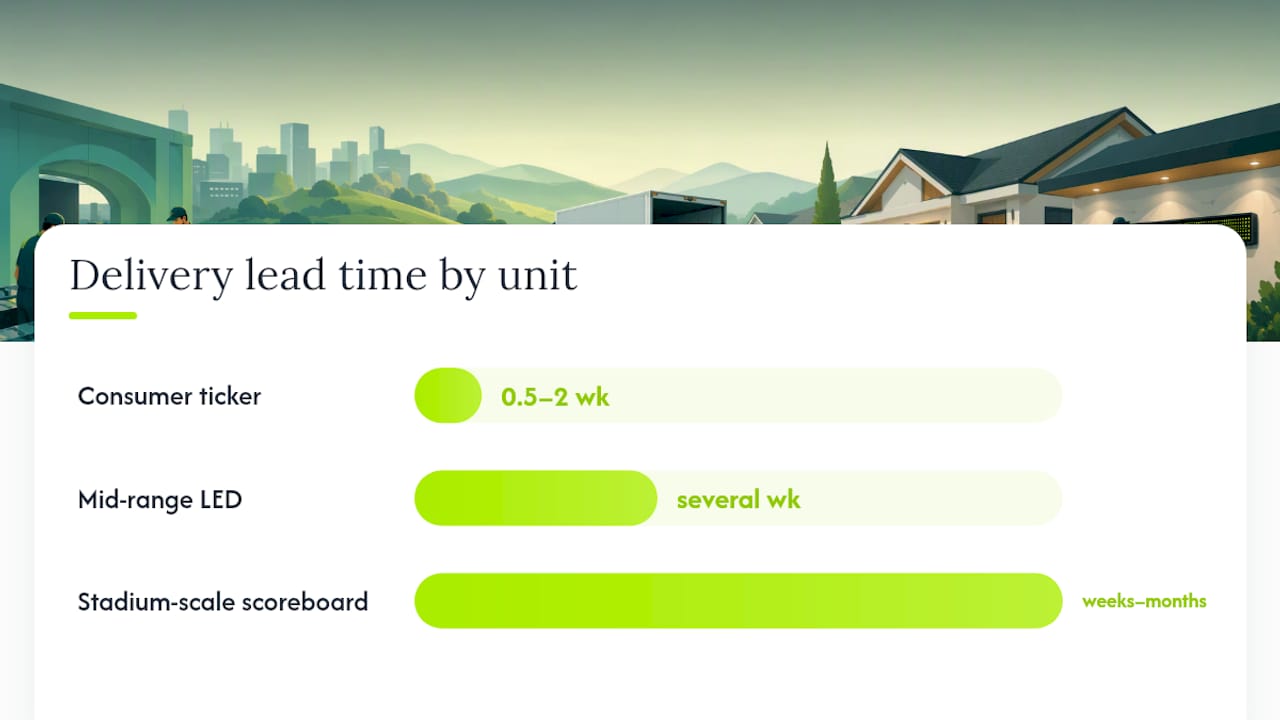
Stadium-scale scoreboards are a different logistical animal entirely. These projects often involve custom fabrication, meaning production alone can take weeks to months before the unit ever leaves the factory. Add freight, crane scheduling, and site readiness, and total lead time from order to installed display can stretch well past a typical retail timeline.
Ask every vendor for a written delivery estimate that separates production time from transit time. A vendor who can only give you a vague “a few weeks” answer probably hasn’t nailed down your spot in their production queue yet, which is a red flag for larger custom orders where scheduling slips are common.
Does Customization Change the Price?
Yes, and often by more than buyers expect going in. Standard colors, standard sizing, and standard mounting keep costs at the baseline quoted price. Deviate from any of those, and the number climbs.
Custom branding, like adding a team logo, sponsor panel, or specific color scheme to a venue-grade display, typically adds a design and production surcharge on top of the base hardware cost. For consumer units, customization is far more modest: some sellers offer optional colored case upgrades for a small added fee, which is a far cry from custom stadium branding but still worth factoring into your budget.
Team-name panels and extra accessory modules on scoreboards, mentioned earlier as cost drivers, fall into this same bucket. Each addition is essentially a small custom order layered onto the base unit, and vendors price them individually rather than bundling them into a flat rate.
The practical takeaway: decide early which customizations actually matter to you. A sponsor panel might be non-negotiable for a stadium operator chasing ad revenue, but for a home buyer, a color upgrade is a nice-to-have, not a budget-driver. Get pricing on customization as a separate line item so you can see exactly what you’re paying for the look versus the function.
Should You Lease or Buy a Sports Ticker?
Purchasing outright is the more common route for both consumer and venue-scale buyers, largely because sports ticker displays don’t depreciate the way, say, a vehicle does, and ownership means no ongoing lease payment stacked on top of the subscription fee you’re already paying for content.
Leasing shows up more often in commercial and institutional settings, where a facility might not want a large upfront capital expense on its books. A leased stadium scoreboard spreads the hardware cost over monthly payments, which can ease a tight annual budget, but it usually costs more in total over the life of the display once you add up the payments.
For home and small venue buyers, leasing is far less common, and it’s rarely worth the complexity. A consumer ticker priced at $1,000 to $2,000 is a small enough purchase that a lease agreement adds administrative overhead without meaningful financial benefit. Buying outright, then budgeting separately for the subscription renewal, tends to be the simpler and cheaper path for anyone outside large institutional purchasing.
If you’re evaluating a lease offer from a vendor, ask directly what the total cost looks like over three to five years compared to an outright purchase plus subscription renewals. Vendors don’t always volunteer that comparison unprompted.
What’s the Real Total Cost of Ownership?
The sticker price is just the entry fee. Total cost of ownership includes the subscription renewal, maintenance, and support fees that show up every year after purchase.
For consumer units, ongoing costs are modest: a monthly feed renewal in the single digits to low tens of dollars, plus whatever warranty coverage the manufacturer offers, which several retail listings put at around two years on typical units. For venue and stadium-scale displays, the ongoing math looks different. Maintenance contracts, software updates for the content feed, and technical support agreements can represent a meaningful annual expense on top of the initial hardware and installation cost.
This is a point worth sitting with: for many buyers, the long-term total cost of ownership ends up driven more by subscription and maintenance fees than by small differences in the initial hardware price. A slightly cheaper display with an expensive support contract can cost more over five years than a pricier unit with a lean subscription. Always ask for a five-year cost projection, not just the sticker price, before you decide.
Hardware Investment or Subscription Value: What Actually Matters?
A lower-cost consumer ticker makes sense when you just want reliable scores in a bedroom or kitchen without app clutter. If you’re outfitting a venue or serious viewing space, budget for professional installation and site work from day one. Either way, don’t fixate on the sticker price alone. Weigh the combination of features and total cost of ownership, because that’s what determines whether you feel good about the purchase a year from now.
— Cameron
Get Live Scores Without the Screen Time Trade-Off
If everything above has you leaning toward the consumer end of the market, The Original LiveWire Board is built for exactly that buyer. No stadium-grade install, no crane rental, no line-itemed site work. Just a Wi-Fi connection, your favorite teams across baseball, football, basketball, or hockey, and instant score updates on a dedicated display that doesn’t pull anyone toward a phone or tablet.
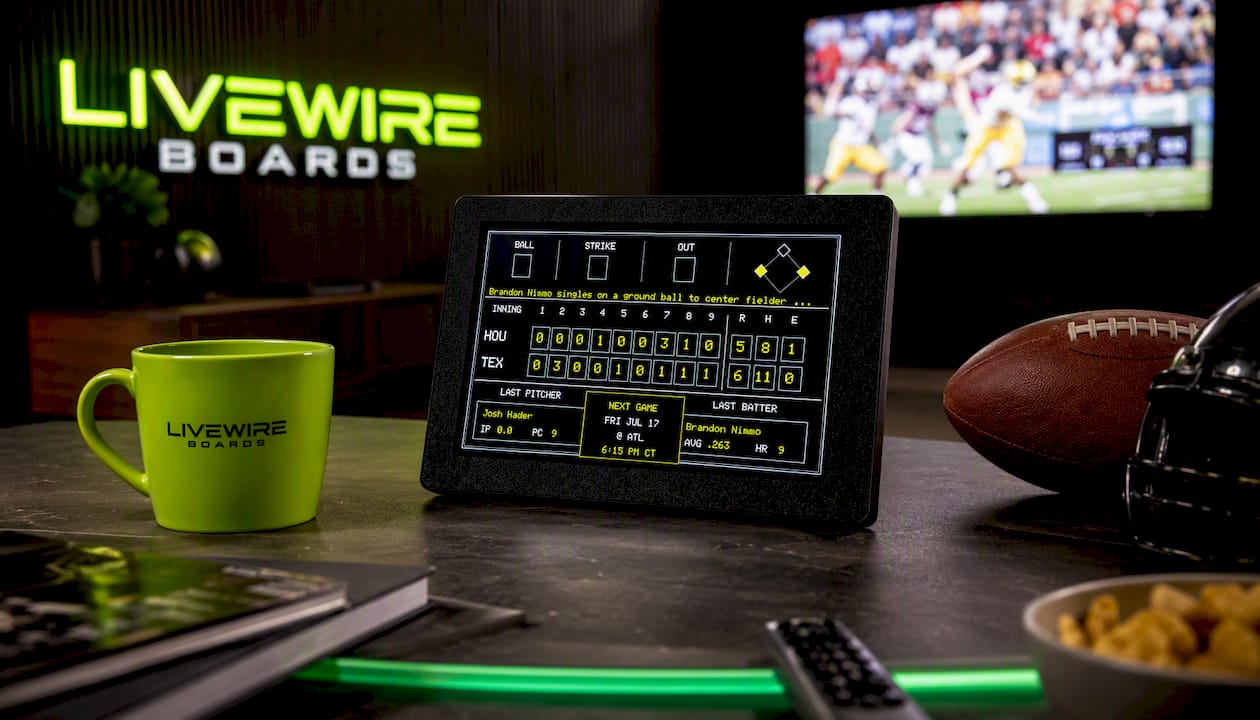
Such products fit households trying to cut screen time and anyone who just wants scores without opening an app. Setup takes minutes, not a work crew. If low upfront cost and low ongoing friction matter more to you than stadium-scale specs, visit the product page and check current pricing and color case options before you buy.
Sources
For deeper research beyond this guide, these three sources cover the vendor side of scoreboard pricing in detail: Electro‑Mech’s cost breakdown explains custom quoting drivers, Sports Venue Calculator’s buyer’s guide offers venue-size price bands, and Comsight’s comprehensive guide breaks down video board technology costs.
- How Much Does a Football Scoreboard Cost? What Sets the Number on a Quote | Electro‑Mech
- LED Scoreboards Buyer’s Guide: Costs, Features & Use Cases | Sports Venue Calculator
- How much does it cost to build a scoreboard? The Comprehensive Guide - Comsight


